
Understanding Pips in Trading A Comprehensive Guide 1826519094
- 07
- Nov
Understanding Pips in Trading: A Comprehensive Guide
A pip, short for ‘percentage in point’, is a crucial concept in trading, particularly in forex trading. It represents the smallest price move that can occur in a currency pair based on market convention. If you are looking to grasp the nuances of trading, understanding what a pip is and how it functions is essential. For more insights into trading strategies, you can check out what is a pip in forex trading Trading Connexion.
What Is a Pip?
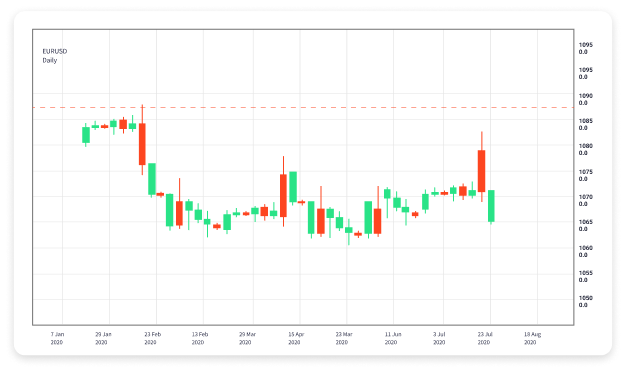
The term pip originated from the forex market where it was traditionally defined as the fourth decimal place of a currency pair. For example, if the EUR/USD pair moves from 1.1050 to 1.1051, that change represents one pip. In terms of value, one pip is typically equal to 0.0001 in most currency pairs, which is a key piece of information for traders.
The Importance of Pips in Trading
Pips are fundamentally important in trading as they allow traders to measure price movements in an easily understandable way. They help in quantifying how much a currency has appreciated or depreciated in value over time. This quantification is vital for calculating potential profits or losses on trades.
By knowing how many pips a trade has moved, traders can make informed decisions about entering or exiting a position based on their trading strategy. This information becomes particularly crucial when utilizing stop-loss orders or take-profit levels, as these levels are often set in terms of pips away from the opening or current market price.
Pips in Different Markets
While pips are most commonly associated with forex trading, they can also be applicable in other markets, such as commodities and futures trading. However, the meaning of pip can vary slightly depending on the market context.
In forex, as mentioned, a pip is typically the fourth decimal place. For currency pairs involving the Japanese Yen (JPY), a pip is usually the second decimal place (e.g., if USD/JPY moves from 110.25 to 110.26, it has moved one pip). In the context of commodities like gold or silver, pips may be calculated based on the scale of the price movement, which could be expressed in dollars or cents instead of pips.
Calculating Pip Value
Understanding the value of a pip is critical for effective risk management and trade execution. The pip value can vary depending on the lot size being traded, which refers to the quantity of currency you are buying or selling.
For a standard lot of 100,000 units in EUR/USD, where one pip is equal to 0.0001, the value of one pip is approximately $10. For a mini lot of 10,000 units, the value of one pip would be around $1. Knowing the pip value allows traders to calculate their profits or losses effectively as market conditions change.
Pip vs. Points

In trading, the terms pip and point are sometimes used interchangeably, but it’s important to differentiate between the two. A point generally refers to a whole number movement in price, whereas a pip typically refers to the fractional changes. For example, if a stock price moves from $100 to $101, it has moved one point. If it moves from $100.00 to $100.01, it has moved one pip.
This distinction is particularly significant in the forex market and should be understood to avoid confusion in trading discussions or during analysis.
How to Use Pips in a Trading Strategy
Integrating pips into your trading strategy can greatly enhance your decision-making process. Here are some ways traders use pips:
- Setting Take-Profit and Stop-Loss Levels: Knowing the number of pips to gain or lose allows you to set clear parameters for your trade.
- Risk Management: By understanding pip values in relation to your account balance, you can make informed decisions about position sizing and managing potential risk.
- Analyzing Price Action: Tracking how many pips the market moves over certain periods helps traders to identify trends and potential reversal points.
Conclusion
In conclusion, a thorough understanding of what a pip is and how it functions is vital for anyone involved in trading. Whether you’re a beginner or an experienced trader, mastering the concept of pips will enhance your trading strategy and decision-making processes. By utilizing pips as part of your overall trading plan, you can navigate the market with greater confidence and clarity.